
🤖“Killer Robots” Edition
The AI industry’s latest ethical showdown arrived last Friday night when the Pentagon punished one company for having principles and rewarded another for being, well, morally flexible.
Anthropic had just been blacklisted by the U.S. government after insisting on two firm rules for military AI: no mass surveillance of Americans and no autonomous weapons deciding who lives or dies. The Pentagon responded the way large bureaucracies traditionally respond to moral objections: by labeling them a “supply-chain risk,” a designation normally reserved for suspicious foreign adversaries, not Silicon Valley startups with ethics concerns.
Enter OpenAI CEO Sam Altman, who promptly announced that his company had managed to preserve those exact same ethical red lines in its own Pentagon contract. This raised an obvious question across the tech world: if the Pentagon refused those conditions five minutes ago, how did they suddenly agree now?
The answer, critics say, is that they didn’t. OpenAI simply agreed that the military could use its technology for “any lawful use,” a phrase that historically has included things like mass surveillance programs that were also, technically, lawful.
In other words, Anthropic drew a line in the sand and got run over by a tank. OpenAI drew the same line, but in disappearing ink.
Altman nonetheless celebrated the agreement as proof that the company had successfully balanced ethics and national security, while the Pentagon celebrated it as proof that Silicon Valley eventually remembers who signs the checks.
According to critics, the agreement’s key safeguard is that phrase “any lawful use,” which means the U.S. military can use OpenAI’s technology for anything the government decides is legal: an arrangement that historically has included such beloved programs as mass data collection, bulk phone surveillance, and whatever else the intelligence community can fit inside a legal memo.
Altman insists this still honors OpenAI’s principles, because the company prohibits illegal surveillance. Skeptics note that almost every controversial surveillance program of the last 30 years was also described as legal at the time.
The compromise also technically bans autonomous AI weapons, except in situations where the law already requires human oversight, which is roughly equivalent to banning bank robbery where bank robbery is already illegal.
OpenAI further promised technical safeguards like “classifiers” to make sure the AI isn’t misused. Experts responded that these tools can detect certain things, but not whether a system is quietly helping build a massive surveillance database or guiding the early stages of a weapons kill chain.
The Pentagon, for its part, seemed pleased with the arrangement, reminding tech companies that America’s military strategy will be determined by the Commander-in-Chief, not by Silicon Valley executives who suddenly discovered ethics the moment someone mentioned autonomous killer drones.

David Horsey - Tribune Content Agency
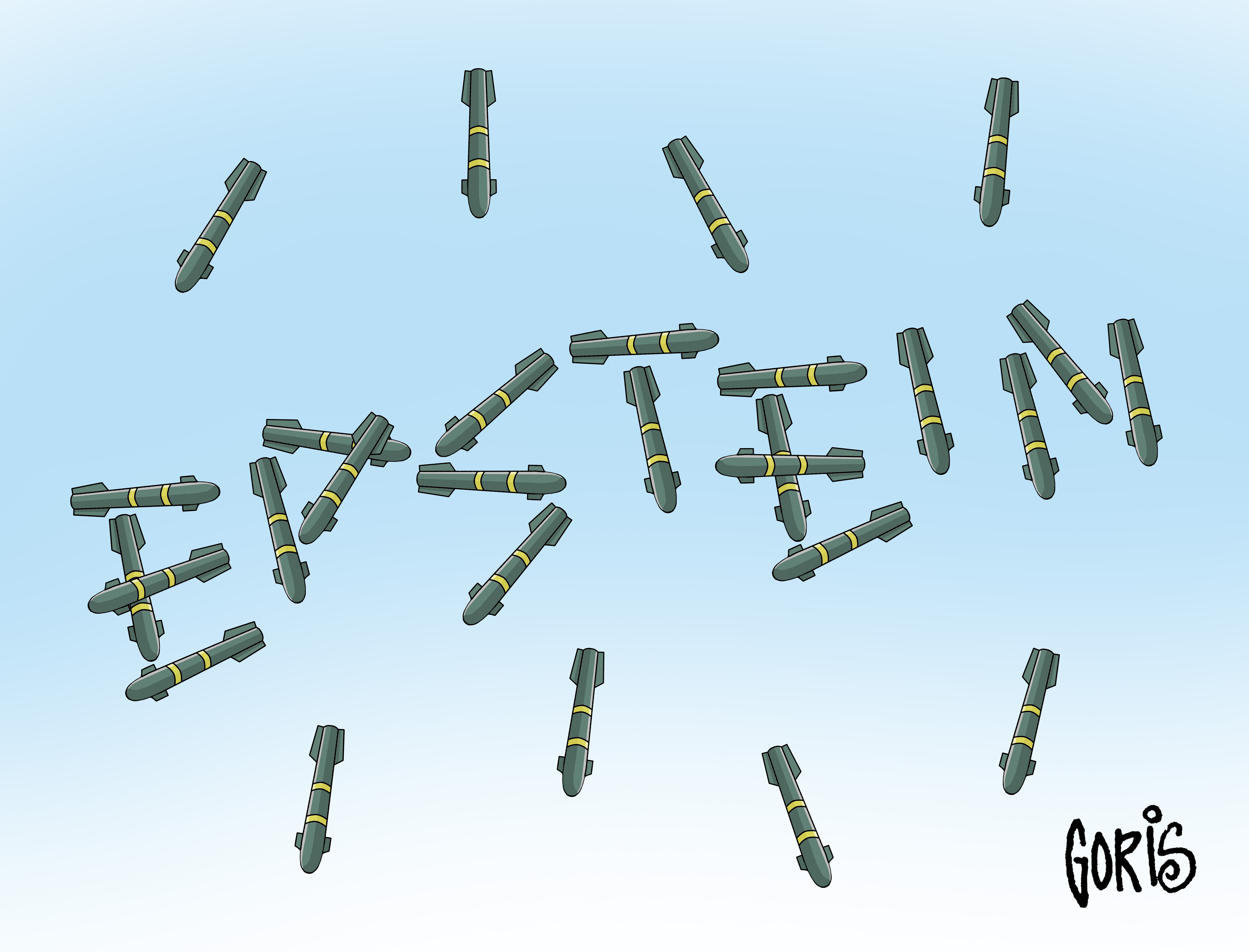
Dennis Goris

Steve Breen - Creators
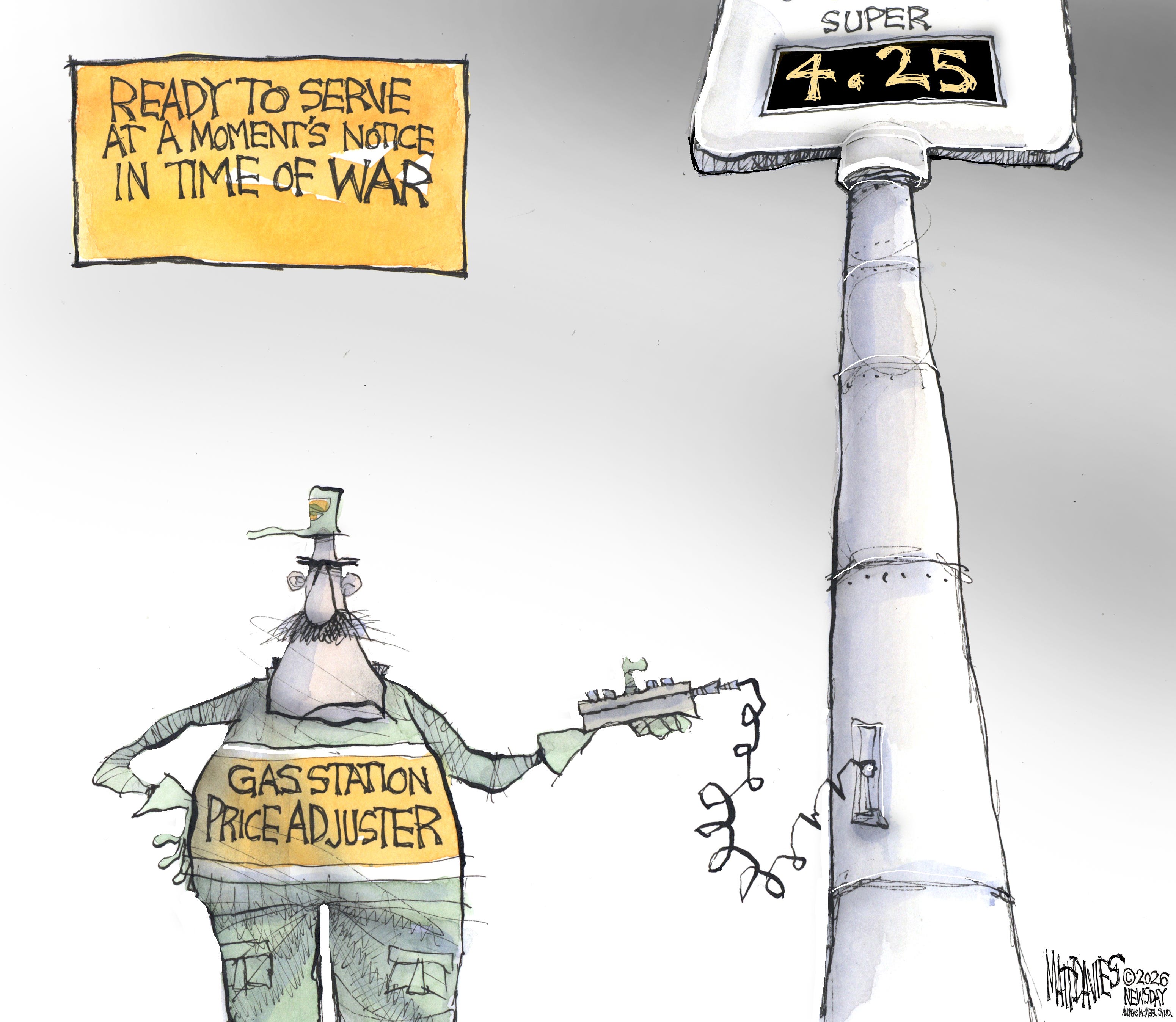
Matt Davies - Andrews McMeel

Drew Sheneman - Substack and Tribune Content Agency
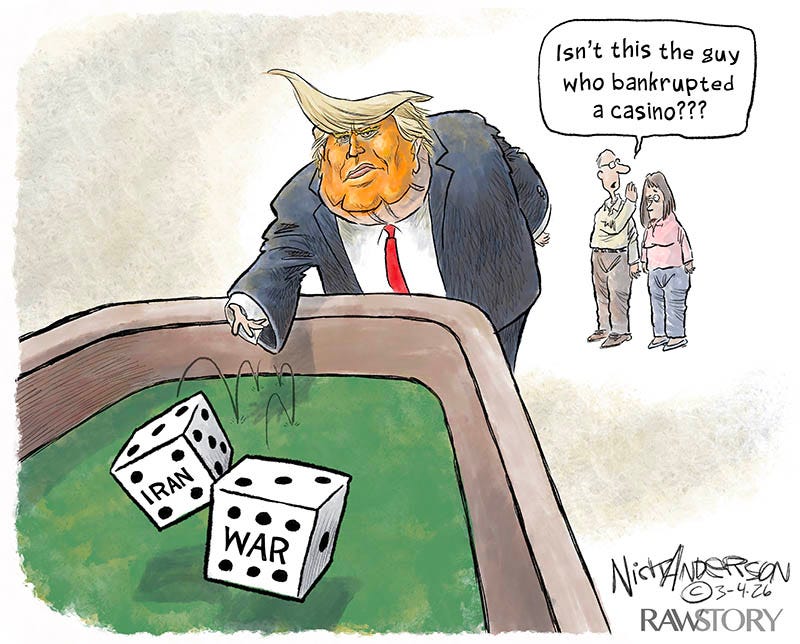
Nick Anderson - Substack and Tribune Content Agency

Bill Bramhall - Tribune Content Agency

Pedro Molina - Tinyview and Tribune Content Agency

Joel Pett - Tribune Content Agency
The U.S. veteran population has been steadily shrinking over the past 30 years as older generations pass away and the military operates with a smaller, all-volunteer force. As a result, veterans have a smaller presence in Congress and face ongoing challenges after leaving service, one of the most persistent being homelessness.
Veteran homelessness has long been an issue in the United States, worsening after World War I and prompting major reforms such as the G.I. Bill, which provided unemployment benefits and education support to help veterans transition into civilian life. While programs like the G.I. Bill and later initiatives have helped reduce homelessness significantly since 2000, the problem still persists.
Veterans tend to live in rural areas or near military bases where benefits and federal jobs are accessible. States like California, Florida, and Texas have the largest veteran populations and also some of the highest numbers of homeless veterans. California alone accounts for about 29% of the nation’s homeless veterans, largely due to high housing costs and living expenses. Western states, Alaska, and Hawaii also show higher rates of veteran homelessness.
Several factors contribute to homelessness among veterans, including high housing costs, social isolation, PTSD and other service-related health issues, unemployment, substance abuse, divorce, and difficulty obtaining loans. Access to healthcare and VA services also varies by region, which can affect veterans’ stability after leaving the military.
Despite these challenges, progress has been made. Veteran homelessness has declined significantly over the past two decades, and some states—such as Connecticut, Delaware, and Virginia—have launched aggressive programs aimed at achieving near-zero veteran homelessness by expanding housing programs and support services.
Overall, veteran homelessness remains a complex issue shaped by economic pressures, health challenges, and social factors. While government programs and community initiatives have improved conditions, continued efforts are needed to ensure veterans can access housing, healthcare, and stable employment after their service.
Trump will claim that he has kept his "no new wars" promise.
After all, this is the SAME "47-year war" America has been fighting for..."uh, a long time, I'm not sure just how long, but a LONG time! Maybe 100 YEARS!"
Wait for it...
(Wish I was joking.)
Very good selection of cartoons.
Thank you for covering the continuing, shameful veteran homelessness problem. If only the warmongers cared as much about the soldiers who fight their wars. It's like they view soldiers in the same manner as most corporations view their employees: useful as long as necessary to achieve their goals, then an expense to be discarded to save money.