
🧢“Undignified Transfer” Edition
President Donald Trump attended the dignified transfer of six U.S. service members killed in the war with Iran and chose the occasion to debut an unusual tribute: a $55 campaign-style baseball cap from his own merchandise store.
Observers noted that civilians attending military ceremonies typically remove their hats as a sign of respect. Trump instead kept his on, possibly out of concern that the moment might otherwise lack sufficient branding. Although, since Trump regards war dead as “losers and suckers,” perhaps we should be relieved he didn’t attempt to grab grieving widows by the p**** (remember, when you’re a star, they let you do it).
Critics reacted with predictable horror. Some called it disrespectful. Others pointed out that the same political universe that once treated a president glancing at his watch as a moral catastrophe seemed oddly relaxed about a commander-in-chief showing up to a solemn military ceremony dressed like he was about to throw out the first pitch.
The six soldiers had been killed in an Iranian strike linked to the escalating war Trump launched days earlier. Asked about casualties earlier in the week, Trump had explained the situation with the timeless empathy and strategic insight: “When you go to war, some people will die.”
Shortly after the ceremony, the president returned to posting online about how the war was basically already won and complaining about allies who hadn’t joined quickly enough.
In fairness, critics may be overlooking the deeper symbolism of the moment. The hat, after all, perfectly captured the modern approach to warfare: solemn sacrifice on the ground, merchandising opportunities at the top.

Pedro Molina - Tinyview and Tribune Content Agency
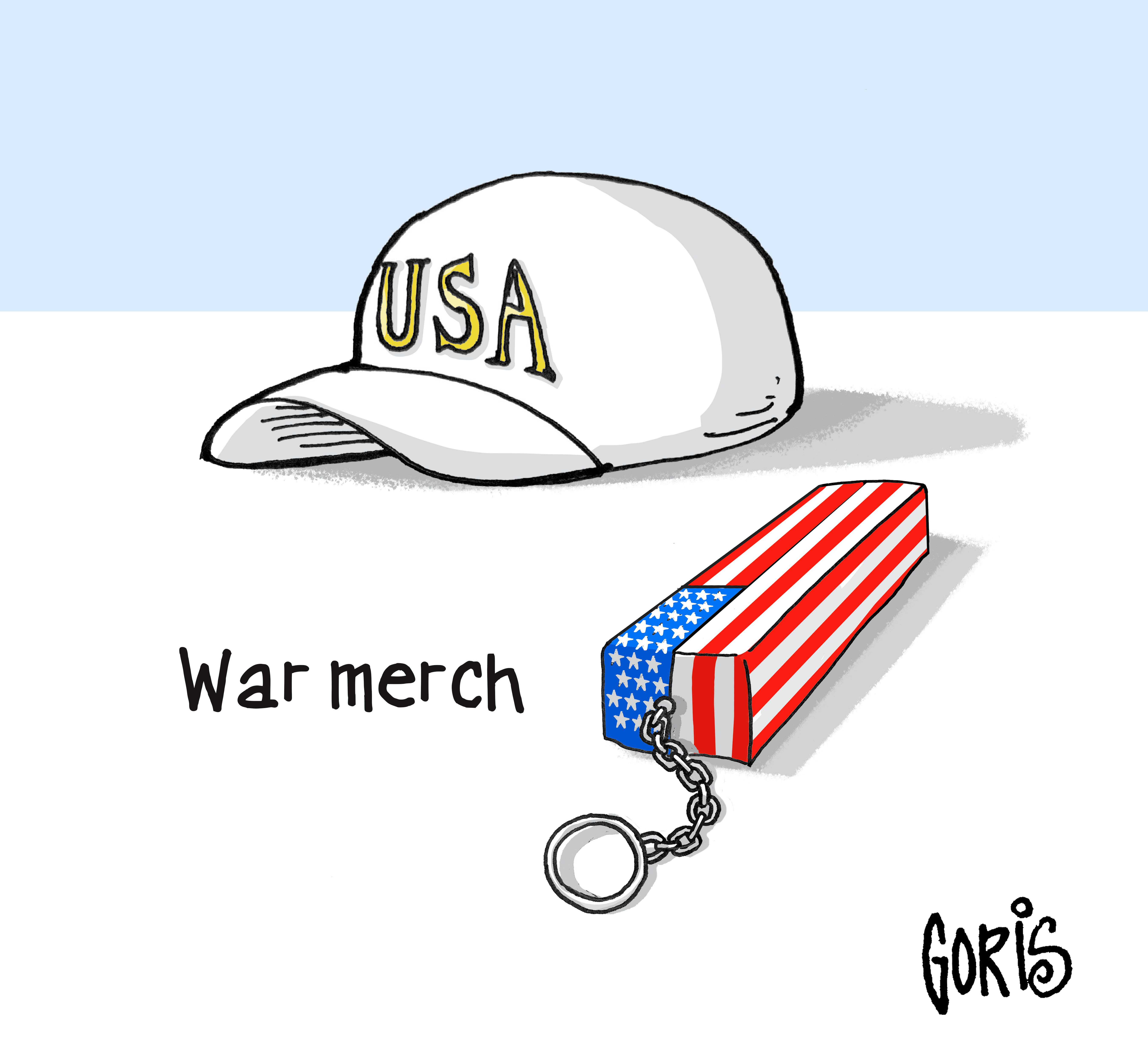
Dennis Goris
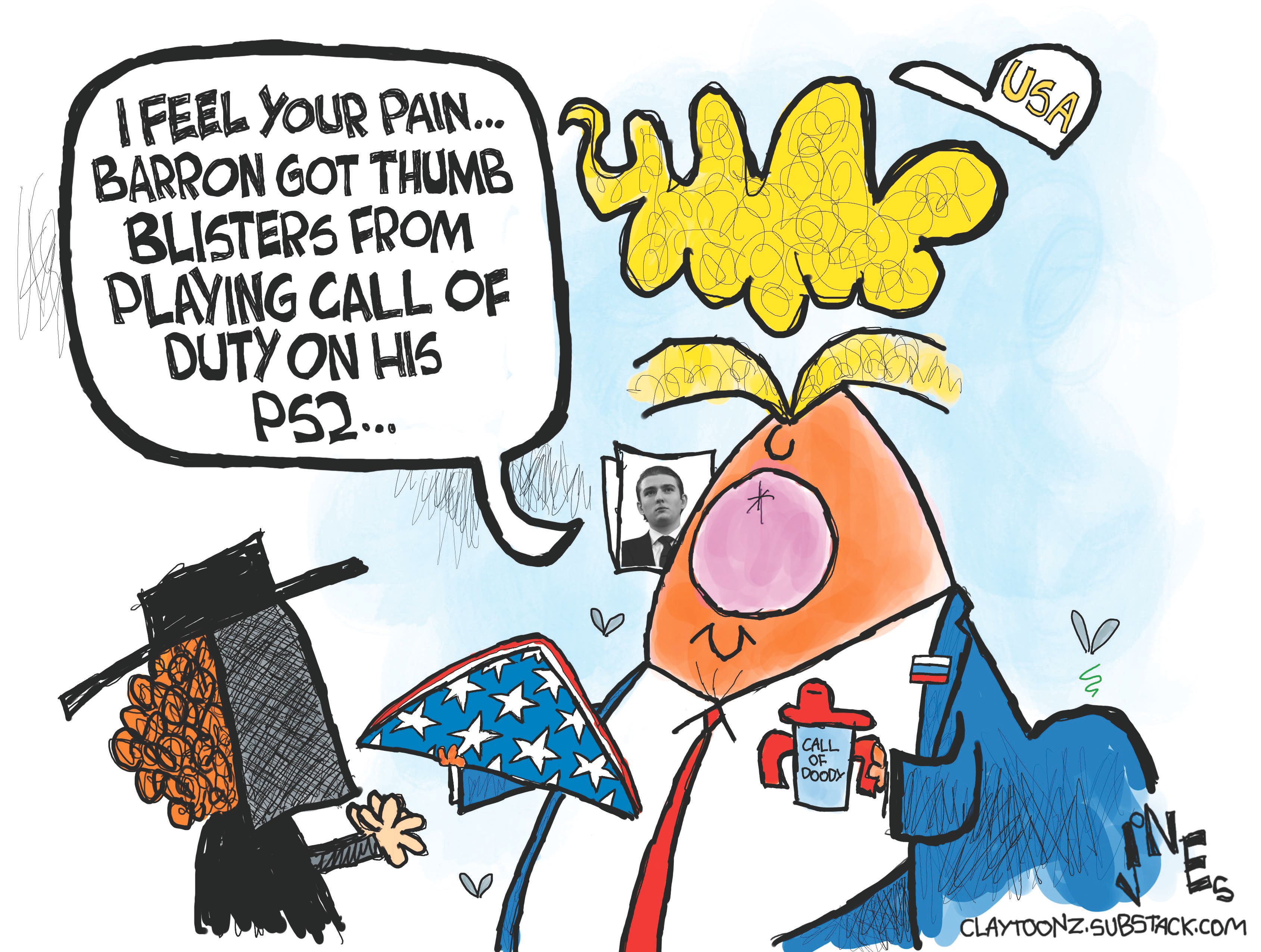
Clay Jones - Substack and Claytoonz

Jeff Daniziger - Tribune Content Agency
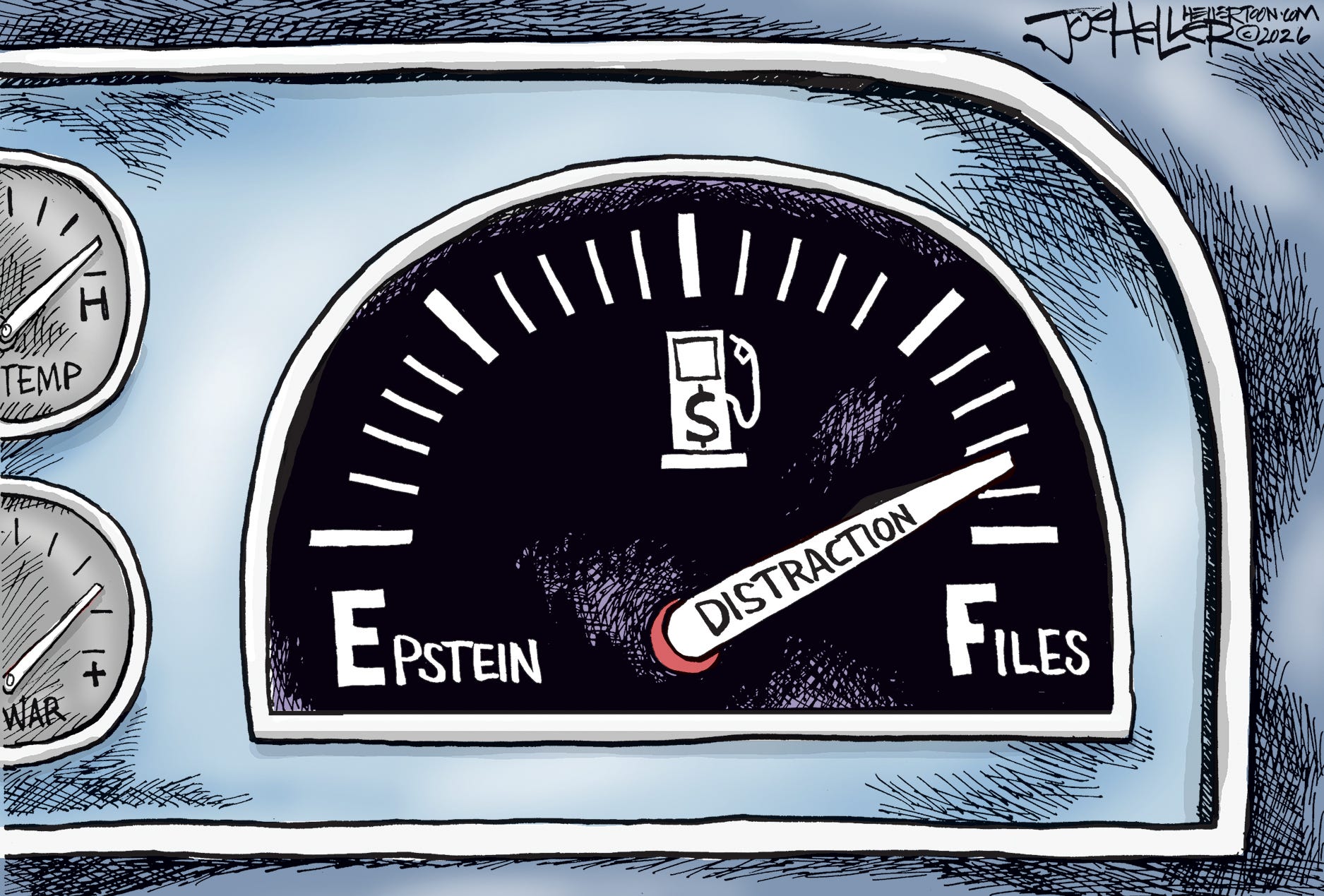
Joe Heller - Hellertoon.com
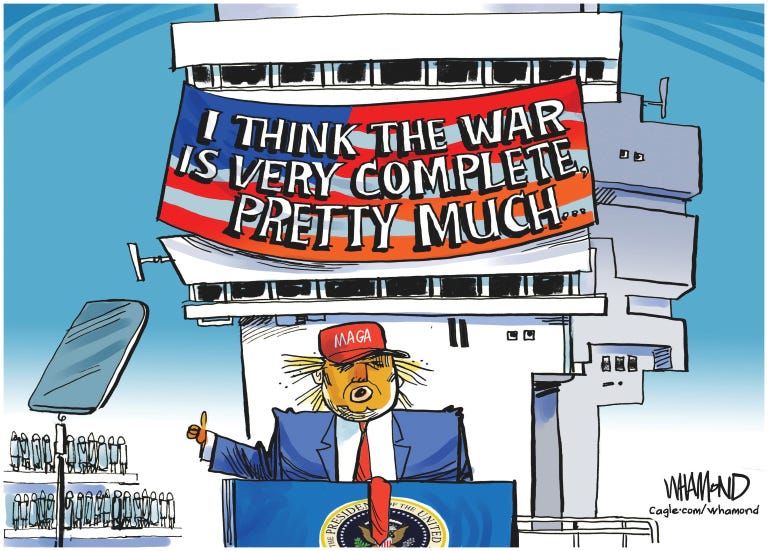
Dave Whamond - cagle.com/whamond
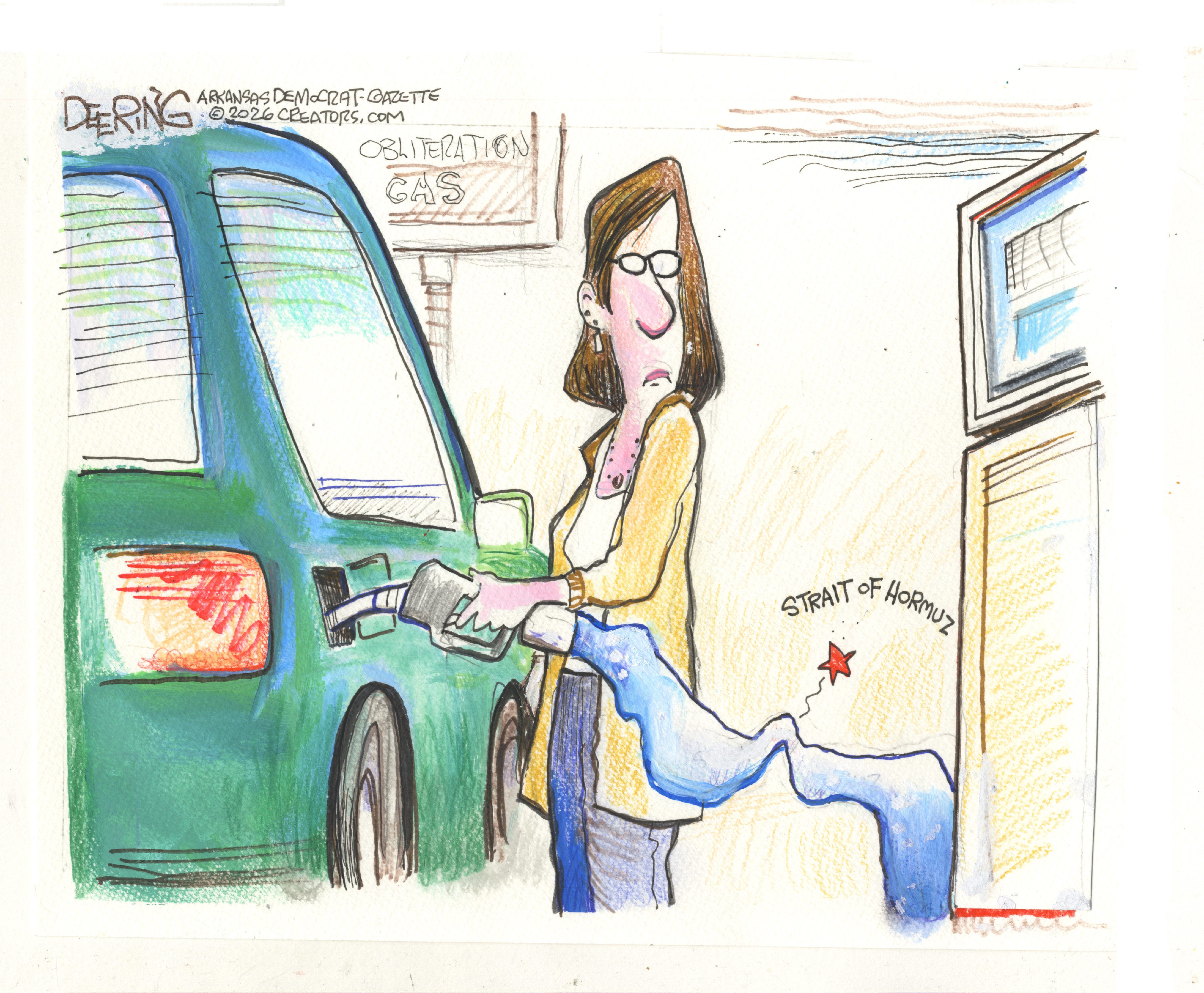
John Deering - Creators
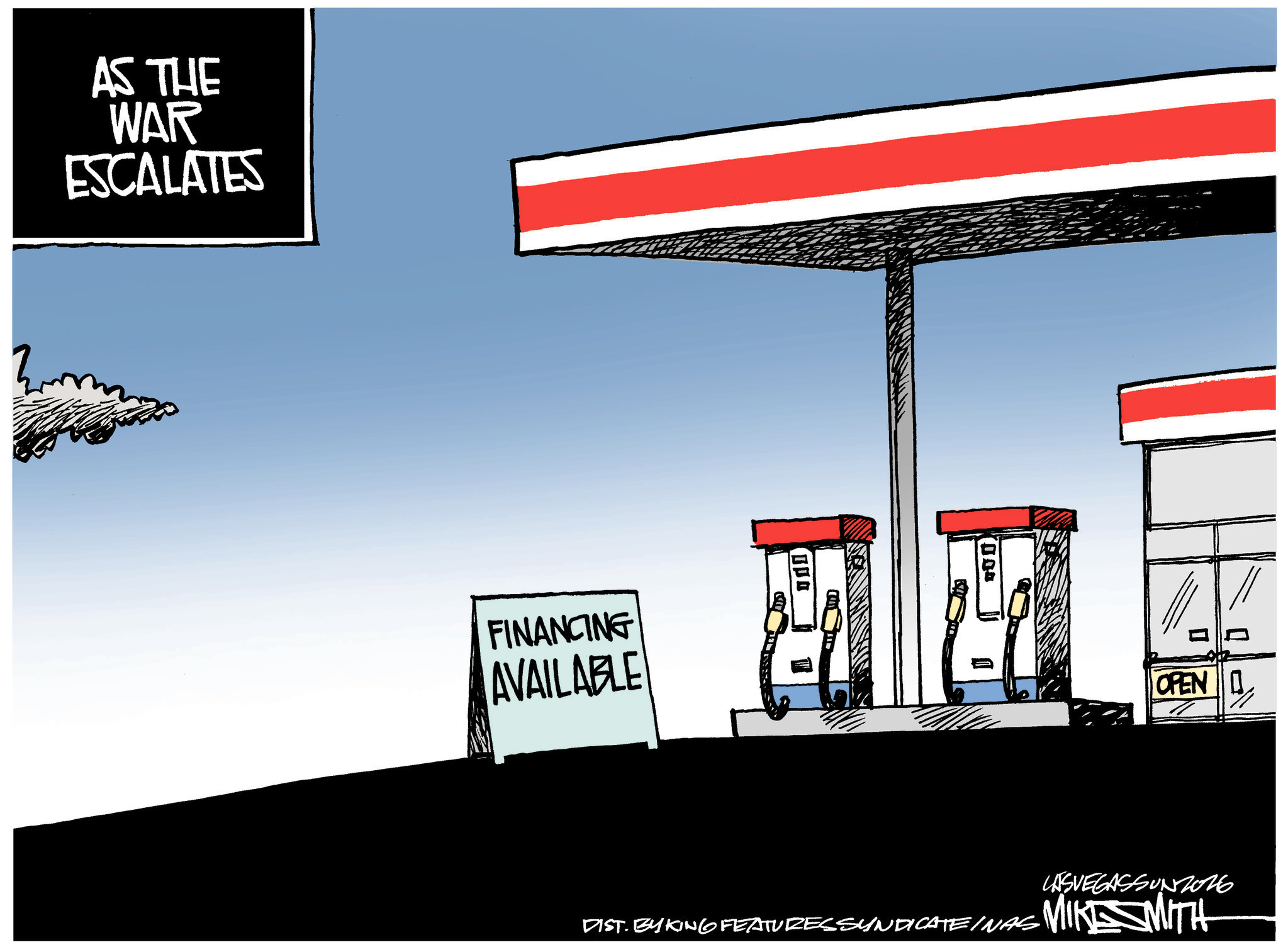
Mike Smith - King Features

Paul Lander and Dan McConnell
Oil markets spent Monday trying to interpret President Trump’s Iran strategy, which appears to consist of several different strategies depending on the hour.
At one point, oil prices surged toward $120 a barrel, sending global markets into a panic and reminding Americans that wars in the Middle East have a mysterious way of showing up at the gas pump. By the end of the day, prices fell back after traders tried to decipher Trump’s shifting messages about whether the war was escalating, ending soon, or about to become twenty times more destructive.
Over the weekend, Trump assured the public that higher oil prices were “a small price to pay” for peace and security. By Monday afternoon, however, he suggested the war was already “pretty much complete,” before returning hours later to threaten Iran with “Death, Fire, and Fury” if it interfered with oil shipping.
Markets reacted accordingly—first panicking, then calming, then panicking again—like a group chat trying to interpret a series of increasingly confusing texts.
Meanwhile, the Strait of Hormuz—through which one-fifth of the world’s oil flows—remains effectively shut down, global inflation fears are rising, and gas prices in the United States are already climbing.
World leaders are now considering releasing emergency oil reserves to stabilize markets, a move economists describe as “temporary relief,” similar to putting a bandage on a volcano.
Very good commentary, and selection of cartoons: Goris, Jones & Danziger on dignified transfer; Heller and Whamond on the war; and Deering, Smith and Lander/McConnell on gas prices.
Today's "appalling, disgusting, revolting, and all too true" award goes to Dennis Goris.
Everything 45/47 touches, dies. That now seems to include what little remained of our national decency.