
😢"Rob Reiner” Edition
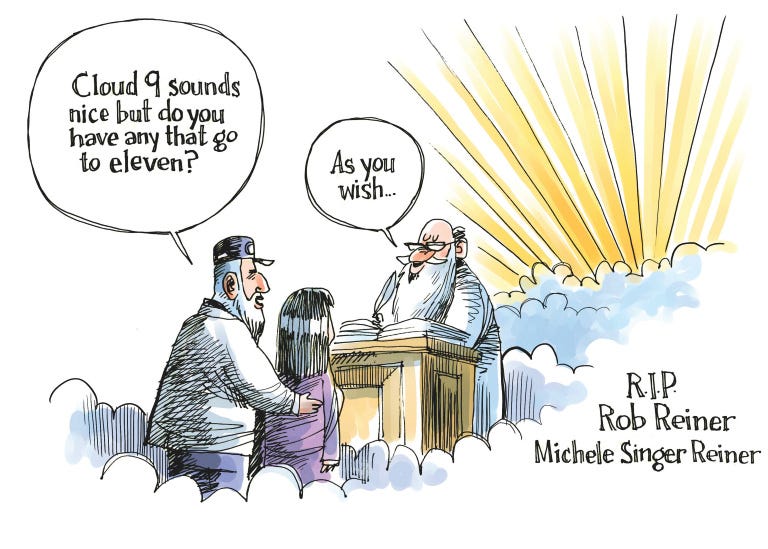
President Trump responded to the shocking murder of Rob Reiner and his wife by doing what he does best in moments of national grief: posting. Within hours, the president announced that the real culprit wasn’t violence, tragedy, or a broken family, but the late director’s “incurable” case of Trump Derangement Syndrome, a condition that apparently causes both political disagreement and homicide. Asked later if he wished to walk it back, Trump instead doubled down, clarifying that Reiner was “deranged,” “very bad for our country,” and—most importantly—dead while insufficiently admiring of Trump.
This take briefly united Washington in something resembling moral clarity. Even MAGA allies blinked, rubbed their eyes, and said things like “this is NOT appropriate,” “this is disappointing,” and “please stop talking.” Apparently they’re just catching up to what the rest of the world has known for more than a decade.
Conservatives who had recently demanded maximum civility after the assassination of Charlie Kirk suddenly found themselves explaining that yes, actually, mocking a murder victim right after their death is still bad, even if the victim once criticized the president.
Law enforcement, meanwhile, stubbornly refused to credit Trump’s theory, noting that Reiner’s son had been arrested and that politics appeared unrelated; a buzzkill detail Trump ignored. Critics pointed out that the episode fit a long pattern of Trump treating death as just another content opportunity, joining his past remarks about John McCain and John Dingell. Democrats called it shameless; Republicans called it “not the time”; Trump called it Monday.
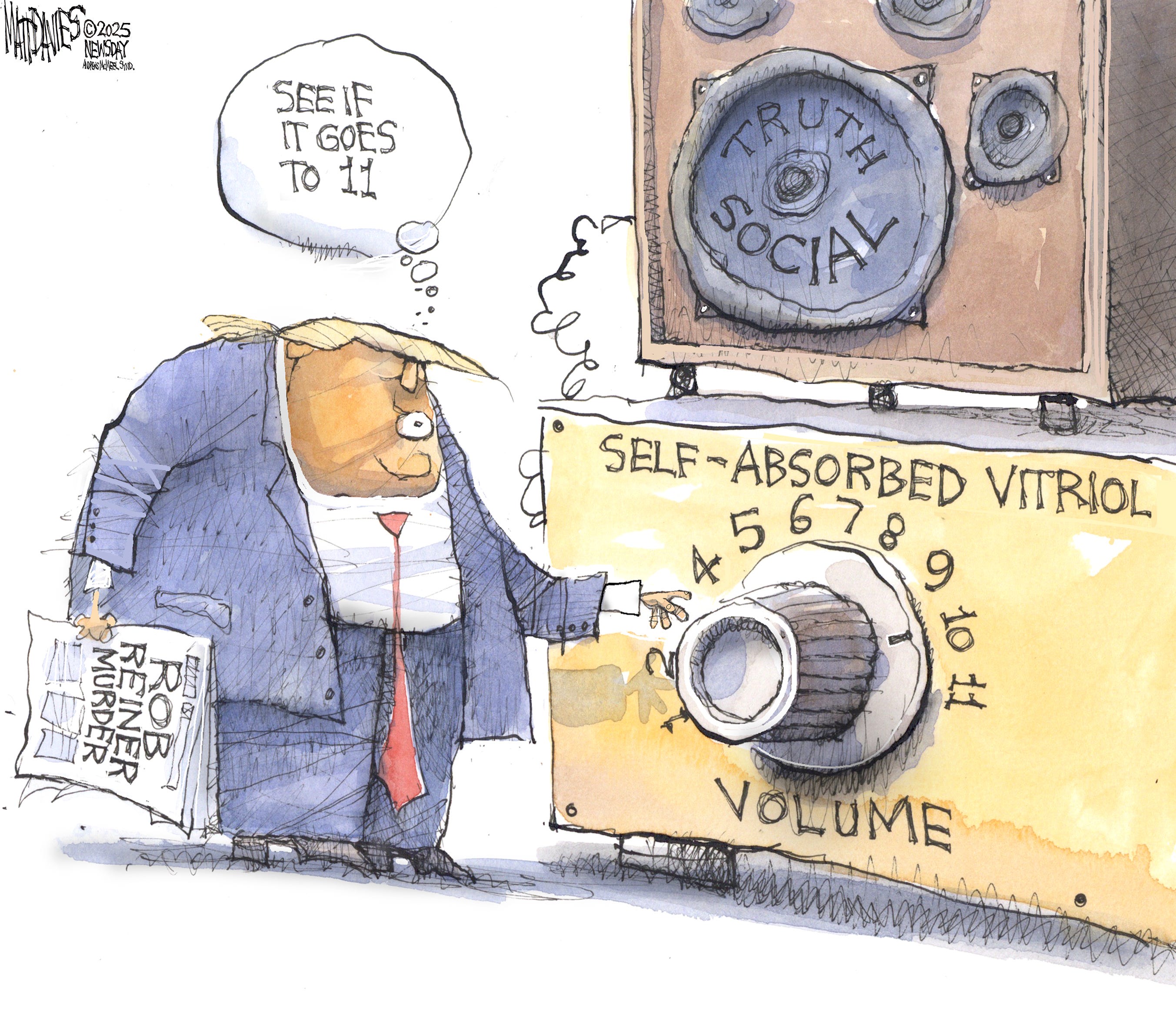
Matt Davies - Andrews McMeel
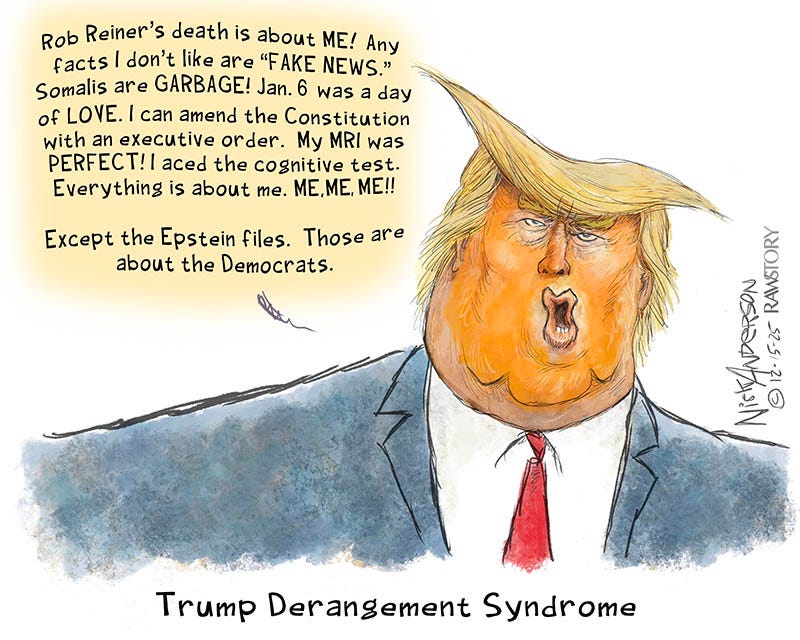
Nick Anderson - Substack and Tribune Content Agency
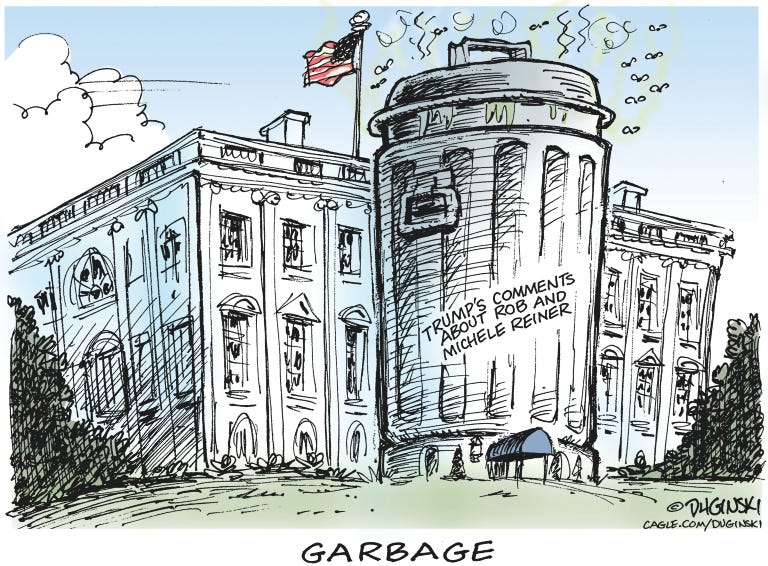
Paul Duginsky - cagle.com/duginski
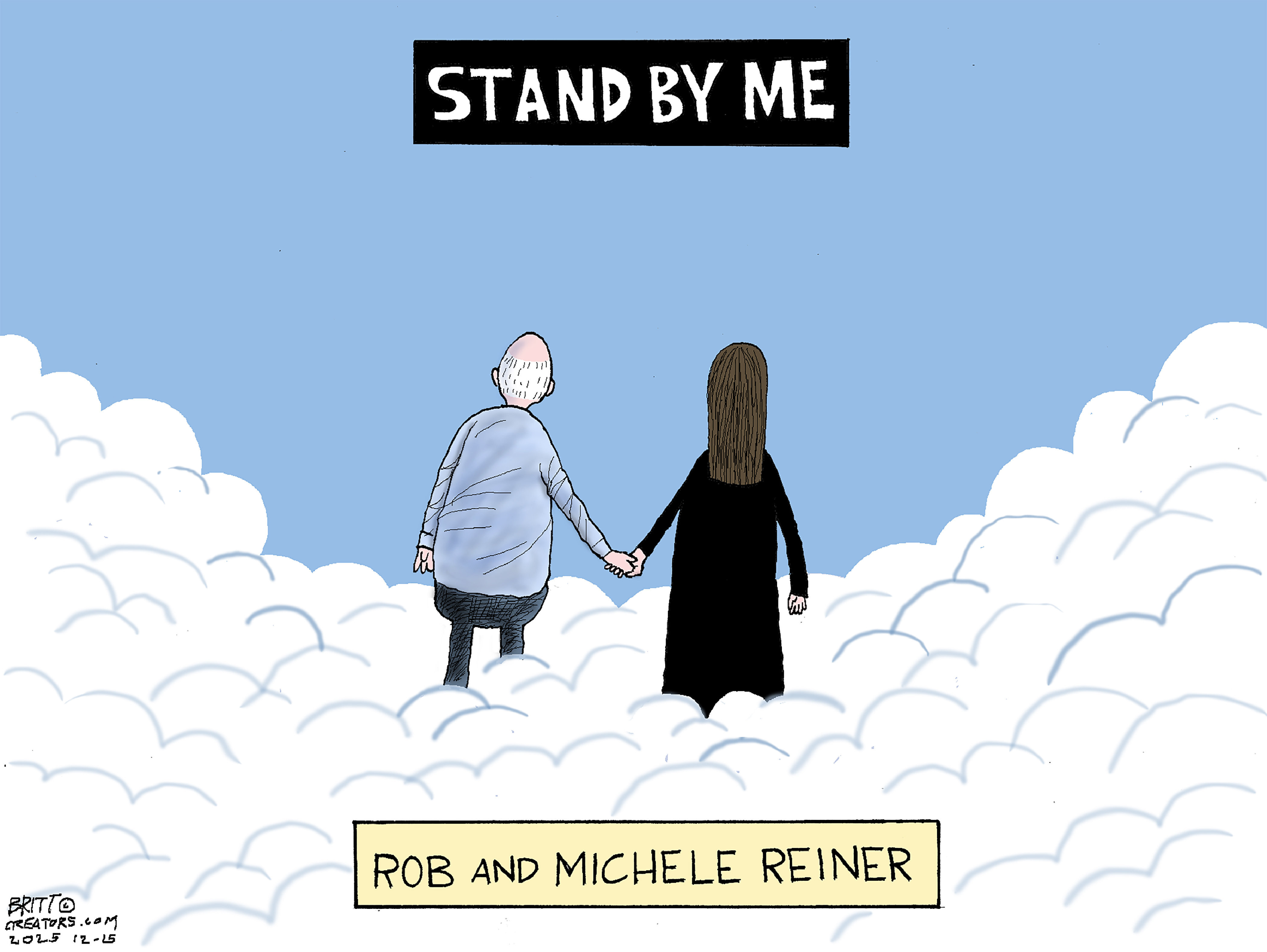
Chris Britt - Creators
Dave Whamond - cagle.com/whamond

Bill Bramhall - Tribune Content Agency
John Deering - Creators
Michael Ramirez - Creators

Clay Bennett - Tribune Content Agency
The violence arrived without irony this time, only exhaustion. At Brown University, a place built for thinking, arguing, and imagining better futures, gunfire cut through a campus already bent under stress and uncertainty. Students who should have been worrying about finals instead learned—again—how quickly ordinary space can turn lethal, how easily safety becomes a rumor. The dead were not symbols. They were people who expected to go home.
Half a world away at Bondi Beach, a setting synonymous with light, openness, and public joy, the same rupture occurred. A place designed for gathering became a crime scene of fleeing. A celebration collapsed into terror, and the world watched another place absorb shock, sirens, and grief. Australia, long held up as proof that gun violence can be restrained, was reminded that no country is immune to hatred finding a weapon.
Together, the events read less like news than a grim refrain. Different laws, different cultures, different continents: identical outcomes. Public spaces violated. Communities stunned. Officials offering words that feel thinner each time they are reused.
There is no clever conclusion to draw anymore. Only the familiar, sinking realization that even our safest places—classrooms, beaches, moments of ordinary peace—now exist with an asterisk. And that the cost of doing nothing continues to be measured in lives that should never have been part of the calculation.
Thank you for a particularly poignant collection of cartoons, and commentary.
Folks, my only advice is to be the love & light this world needs now more than ever.