
🍋“Lemon-Aid” Edition
In the latest installment of “Who Needs the First Amendment Anyway?”, the Justice Department has decided that covering a protest is now indistinguishable from organizing it.
Don Lemon and Georgia Fort showed up at a Minnesota church to report on demonstrators chanting “ICE out.” They brought notebooks and cameras. The government apparently thinks they brought a criminal conspiracy.
Instead of charging people who actually interrupted the service, federal prosecutors reached for a rarely used civil-rights statute—one designed to protect constitutional freedoms—and used it to accuse two journalists of depriving others of constitutional rights. In other words: reporting on a protest is now allegedly a felony conspiracy against freedom.
It’s a bold rebrand. “Freedom of the press” now comes with a potential 10-year sentence.
A federal magistrate reportedly balked at signing an arrest warrant, noting there was “no evidence” Lemon committed a crime. Undeterred, prosecutors pressed forward anyway, because a commitment to constitutional principles apparently means ignoring the part where no crime occurred.
The administration’s theory appears to be that if journalists stand near a protest, they become part of it. By that logic, meteorologists are hurricanes and Trump can sharpie them into the map and declare them a national disaster.
The bigger message is less subtle: If you show up to document public dissent—especially dissent about immigration policy—you might find yourself in handcuffs. It’s not about winning a case; it’s about making sure the next reporter thinks twice before pressing “record.”
Journalists have historically covered everything from Selma to January 6 as “surrogates for the public.” The new innovation is treating those surrogates as suspects.
The First Amendment, long considered a cornerstone of American democracy, is now an impediment, because Trump is not interestd in democracy. And the rest of us are left to wonder whether the phrase “freedom of the press” has been quietly edited to read: some restrictions may apply.
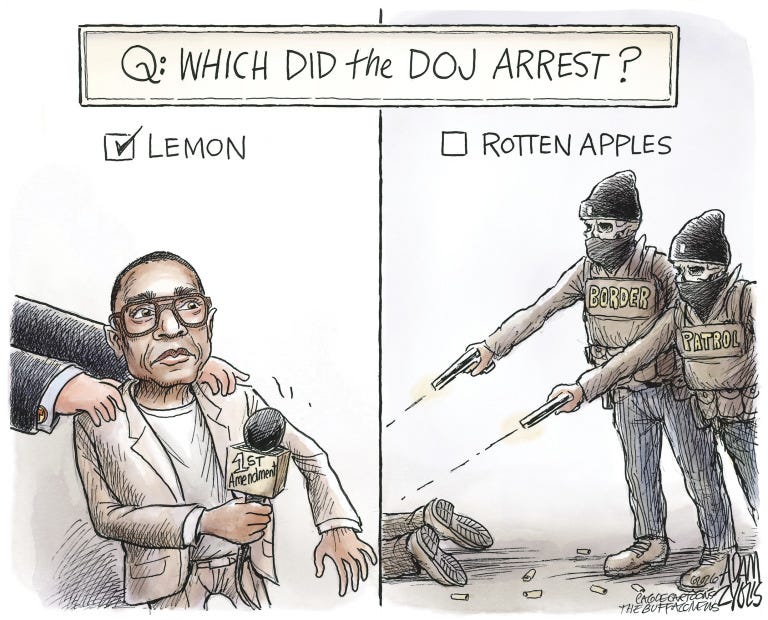
Adam Zyglis - cagle.com/zyglis
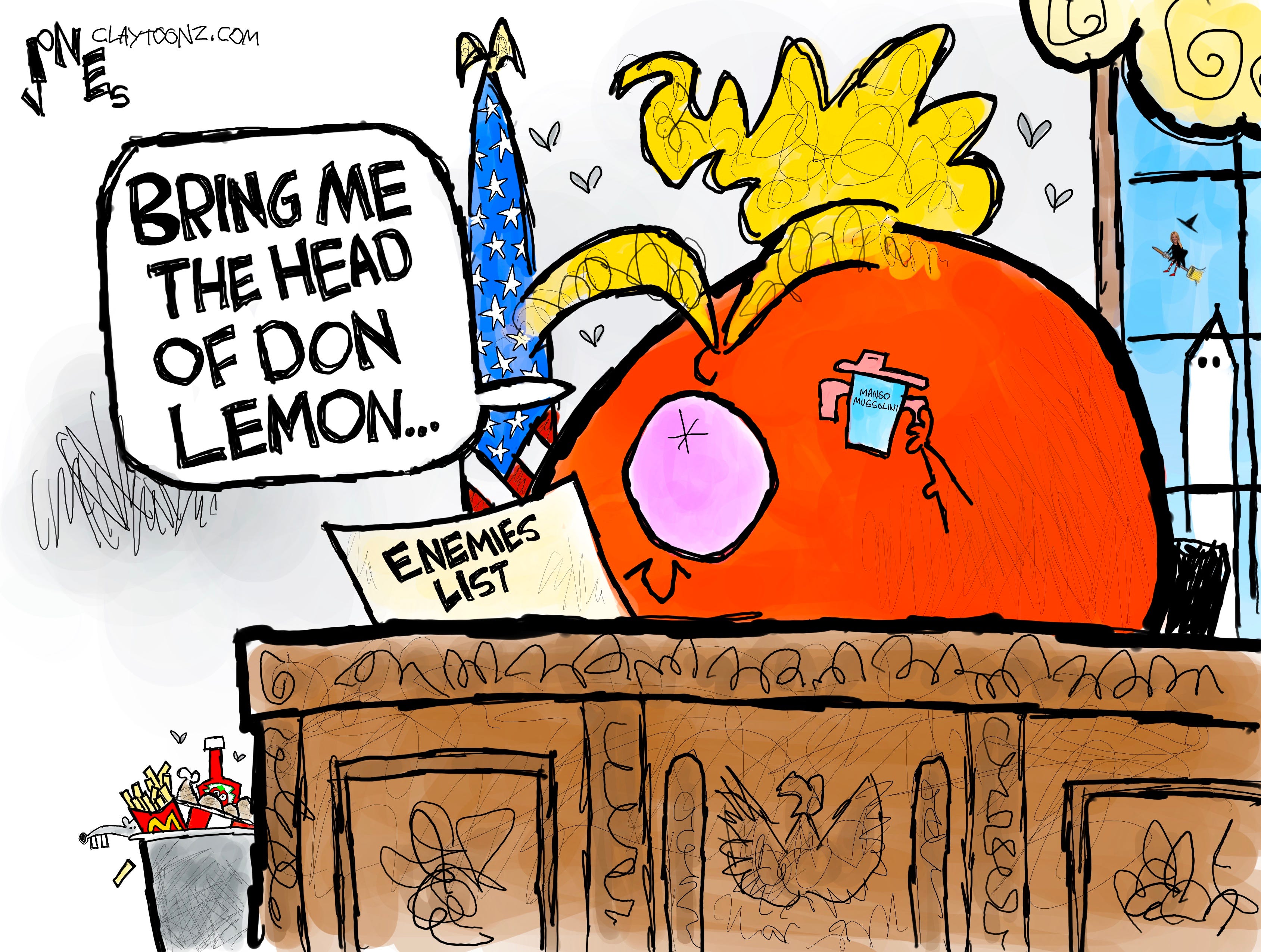
Clay Jones - Substack and Claytoonz
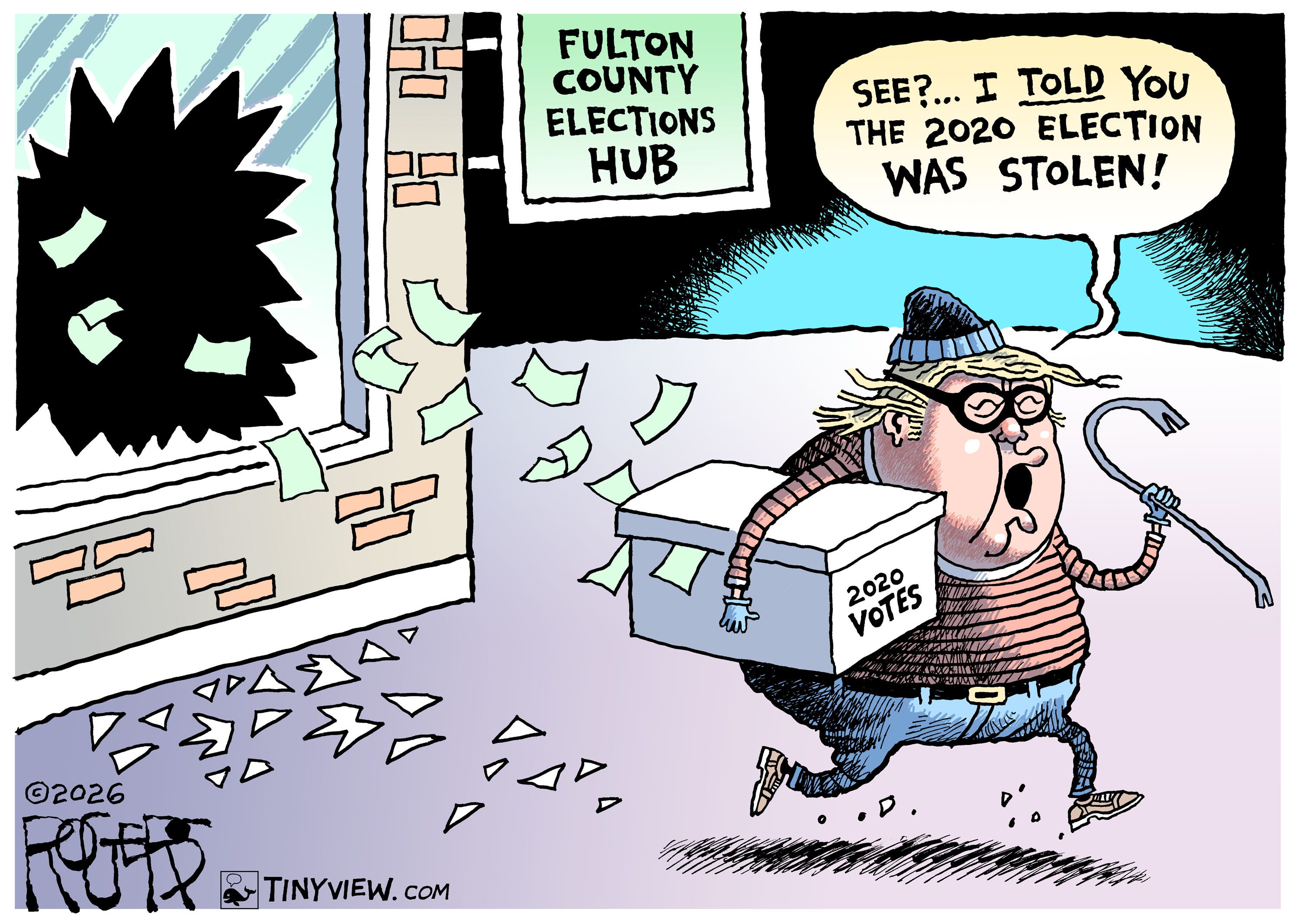
Rob Rogers - Substack and Andrews McMeel
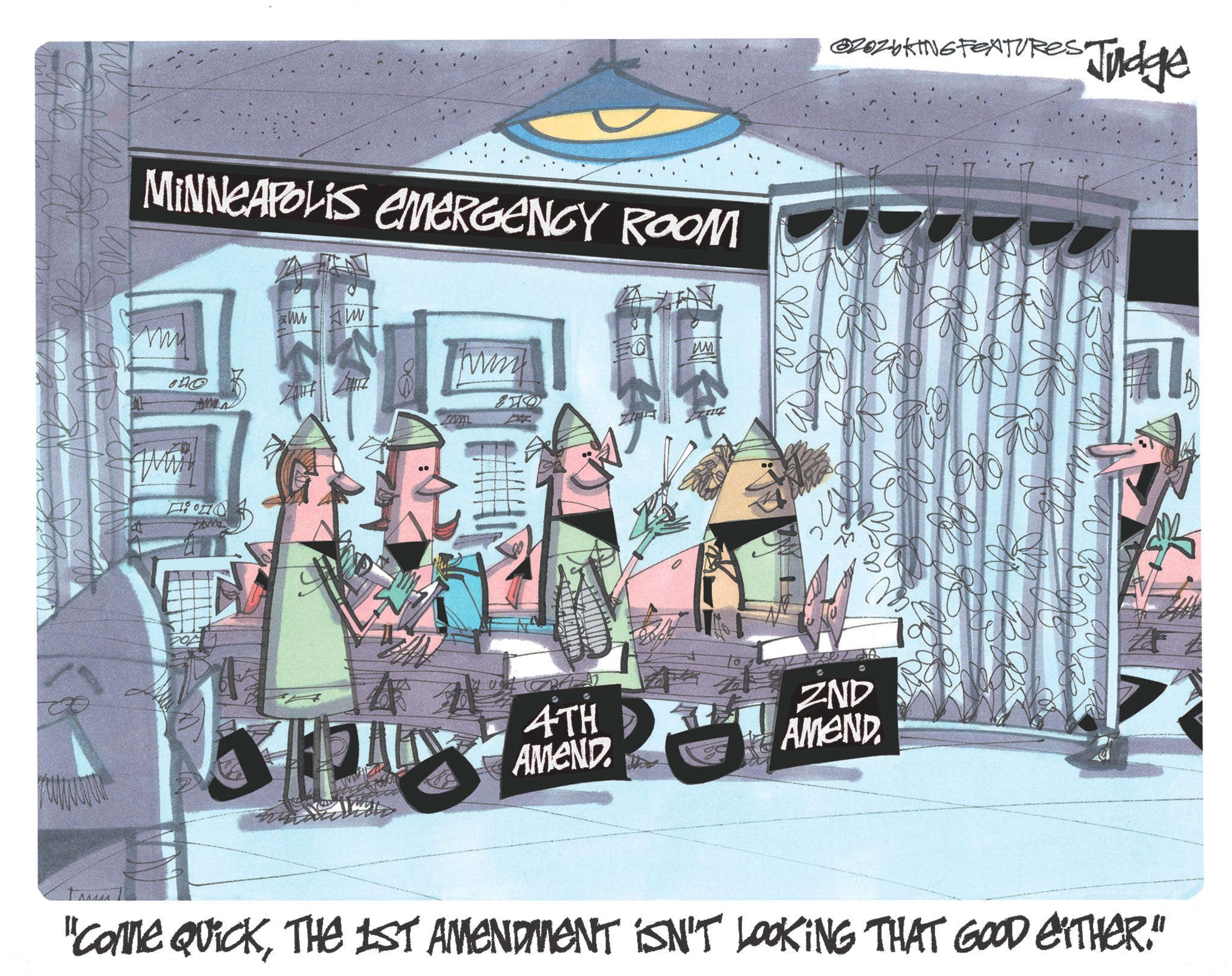
Lee Judge - King Features

Clay Bennett - Tribune Content Agency
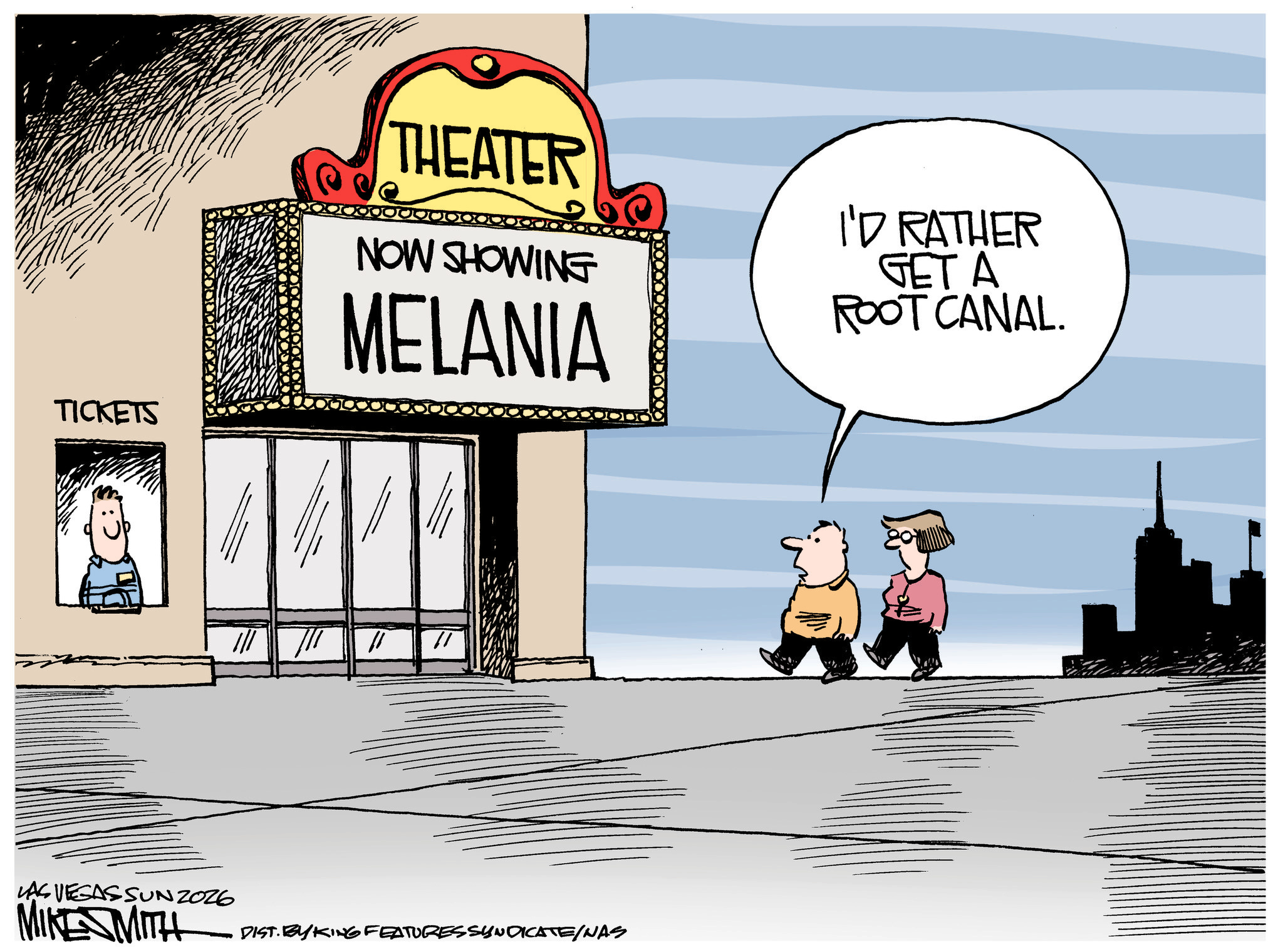
Mike Smith - King Features
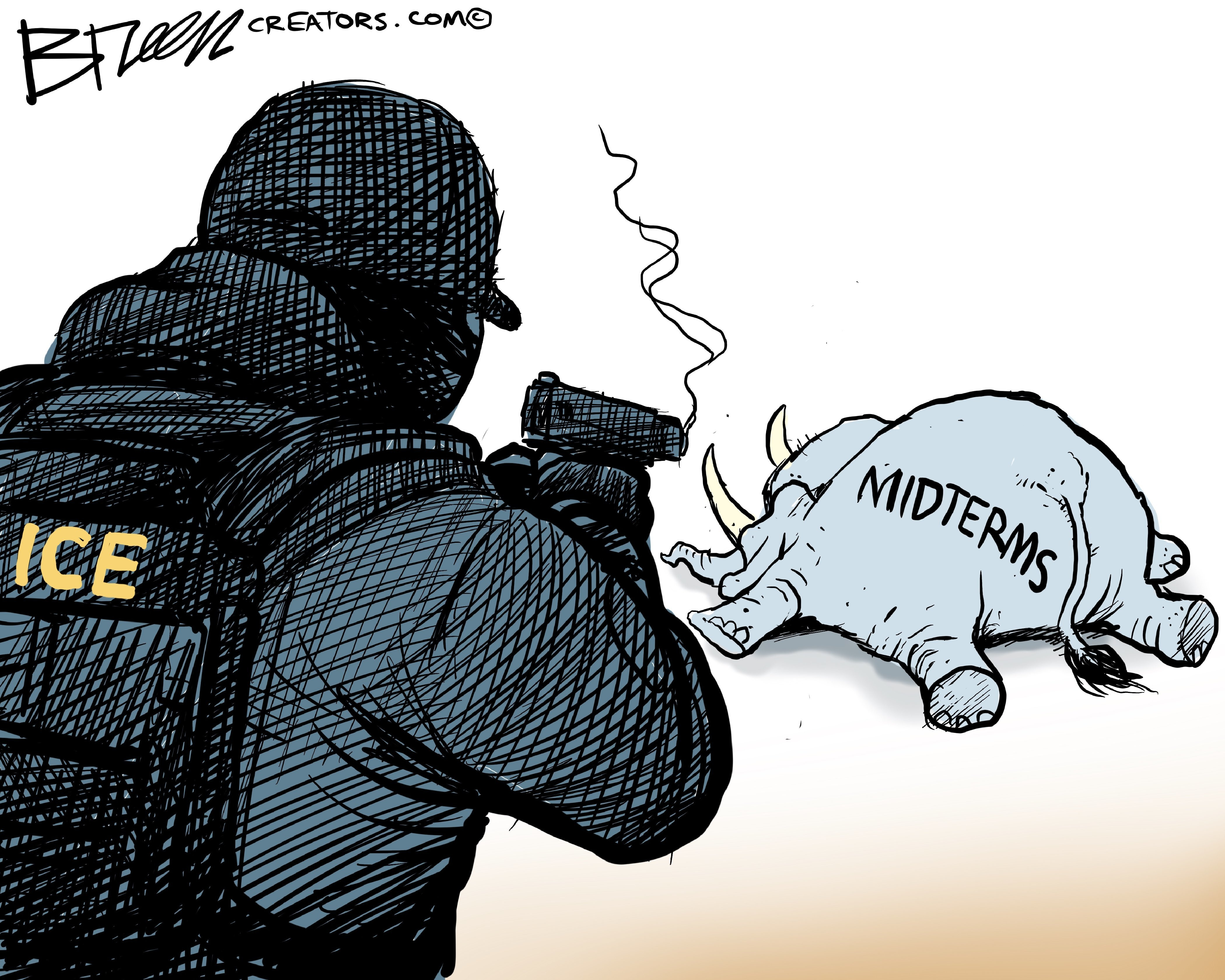
Steve Breen - Creators

Chris Britt - Creators
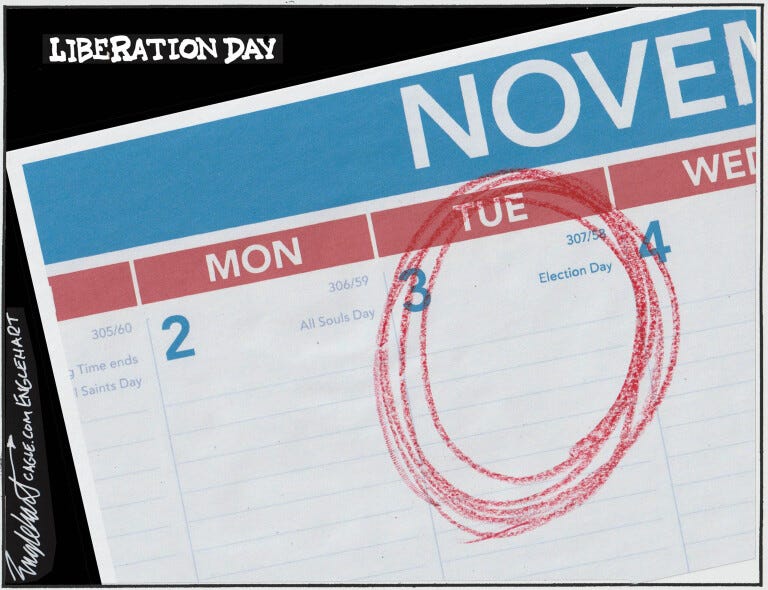
Bob Englehart - cagle.com/englehart
In a development that has Republicans blinking hard and checking the calendar to make sure it’s not April Fools’, a Democrat just won a Texas state Senate seat in a district Donald Trump carried by 17 points.
Yes, Texas. Yes, that Texas.
Democrat Taylor Rehmet defeated Republican Leigh Wambsganss 57–43 in a Fort Worth–area district that hasn’t sent a Democrat to the state Senate since the early Reagan years. That’s roughly a 31-point swing from Trump’s 2024 margin, large enough to make even the most confident GOP strategist sweat.
Even Ron DeSantis felt compelled to weigh in, offering the political equivalent of “this is fine” while the room fills with smoke: special elections are quirky, he said, but a swing of this magnitude can’t be ignored.
And this wasn’t some tiny, low-population fluke district where 12 people and a Labrador determine the outcome. Texas Senate District 9 has nearly a million residents. It’s bigger than a U.S. House district. It’s Tarrant County territory: defense contractors, megachurches, tea party veterans, and a longtime Republican stronghold. The kind of place where Democrats usually show up to practice losing gracefully.
Instead, they won by double digits.
Trump himself tried to juice turnout, posting three times about the race as if Truth Social enthusiasm would materialize at the polls. It didn’t. In fact, Democrats slightly improved their margin on Election Day. The base did not, in fact, storm anything, except maybe their medicine cabinets for Pepto-Bismol.
Money didn’t save the GOP, either. Wambsganss raised more than $2.5 million. Rehmet raised less than $400,000. In 2026, apparently, $2.5 million buys you a very expensive lesson in voter mood.
There are caveats, of course. It was a special election. Turnout was relatively low. Trump’s coalition has a well-documented tendency to treat off-cycle races like optional homework. All true. But even in that context, a 31-point swing is not a “quirky Saturday runoff.” It’s a flashing red dashboard light.
Tarrant County has long been viewed as a bellwether. If Democrats can post numbers like this there, suddenly talk of flipping bigger prizes—like a U.S. Senate seat in Texas—doesn’t sound quite as fantastical. It’s still a steep climb; Democrats haven’t won statewide in Texas since the 1990s. But when Reagan-era districts start turning blue by 14 points, the math begins to look less impossible and more uncomfortable.
Republicans can dismiss it as an anomaly. They can blame the weather, the calendar, voter fatigue, or the alignment of Saturn. But when deep-red suburbs start drifting away in noticeable chunks, it stops looking like a one-off and starts looking like a warning.
So happy to see America's media has moved on from the Trump-created distraction of "the royalty formerly known as a prince" (Minneapolis reference) and moved back toward Trump and his evil destruction of our rule of law.
(I don't mean you folks at Counterpoint. You folks are GREAT!)
Love your posts🥰